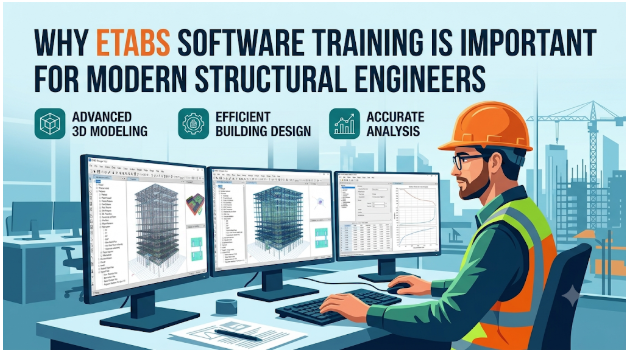
The construction industry is experiencing significant transformation with the growing use of technology in planning, analysis, and design. Modern structural engineers are expected to understand not only engineering concepts but also advanced digital tools that improve accuracy and efficiency. Selecting civil engineering software courses with placement helps aspiring professionals gain practical exposure, develop industry-relevant skills, and improve their career opportunities. As structural projects become more complex, software knowledge has become an important requirement for engineers who want to create safe, efficient, and reliable designs.
The Changing Landscape of Structural Engineering
Structural engineering has always been based on strong technical principles, but the way engineers approach projects has changed considerably. Earlier, calculations and drawings were mainly completed through traditional methods, which required significant time and manual effort. Today, digital solutions allow engineers to analyze structures, identify possible challenges, and improve designs before construction begins.
Advanced engineering software has become a valuable support system for professionals working on residential buildings, commercial complexes, bridges, and large infrastructure projects. These tools help engineers make better decisions by providing detailed insights into structural behavior under different conditions.
For modern engineers, learning software applications is no longer an optional skill. It has become a crucial part of professional development and helps them stay competitive in a technology-driven industry.
Why ETABS Knowledge Is Valuable for Engineers
Structural design involves multiple factors, including material strength, load calculations, safety requirements, and environmental conditions. Engineers need reliable tools that can simplify complex analysis while maintaining accuracy. This is where ETABS plays an important role.
ETABS is widely used for building analysis and design because it allows engineers to create structural models, evaluate performance, and understand how different forces affect a structure. With proper training, professionals can work more confidently on projects involving multi-storey buildings and advanced structural systems.
Practical knowledge of ETABS helps engineers:
- Develop detailed structural models.
- Analyze building performance under different loads.
- Understand structural responses during various conditions.
- Improve design accuracy and efficiency.
- Prepare professional-level project reports.
For students and young professionals, gaining expertise in such tools creates a strong foundation for entering the structural engineering field.
Connecting Academic Knowledge with Real-World Applications
Many civil engineering students understand theoretical concepts during their education but face challenges when applying those concepts in professional environments. The difference between classroom learning and industry expectations can affect their confidence when starting their careers.
Practical software training helps close this gap by allowing learners to work on examples that reflect real engineering situations. Instead of only understanding formulas and concepts, students learn how those principles are applied in actual design processes.
A well-structured training program introduces learners to:
- Real project workflows.
- Industry practices and standards.
- Design analysis techniques.
- Problem-solving approaches.
- Professional software usage.
This practical exposure prepares engineers to handle workplace responsibilities more effectively.
Career Benefits of Structural Software Training
The demand for skilled structural engineers continues to increase as cities expand and construction projects become more advanced. Companies prefer professionals who possess both engineering knowledge and practical software capabilities.
Engineers with software expertise can explore opportunities in areas such as structural consultancy, design firms, construction companies, and infrastructure organizations. Their ability to analyze and modify designs using digital tools makes them valuable members of project teams.
Software skills can support career growth by helping professionals:
- Improve job opportunities.
- Increase workplace efficiency.
- Handle complex engineering assignments.
- Communicate technical information more effectively.
- Develop confidence in professional projects.
For fresh graduates, these skills can create a competitive advantage while applying for entry-level positions.
What Makes a Good Engineering Software Training Program?
Selecting the right training program plays an important role in developing practical skills. A course should focus on application-based learning rather than only explaining software features.
An effective training program should include:
- Guidance from experienced professionals.
- Hands-on practice with engineering projects.
- Detailed understanding of software functions.
- Industry-oriented assignments.
- Career guidance and placement assistance.
Learning software without practical application may limit a student’s ability to use those skills in real situations. Therefore, choosing a program that combines technical knowledge with practical experience can lead to better learning outcomes.
The Role of Placement Support in Career Development
Completing a training course is an important achievement, but applying those skills professionally requires proper career support. Placement-focused programs help learners understand employer expectations and prepare for opportunities in the engineering sector.
Career-oriented training can provide support through:
- Technical interview preparation.
- Resume improvement.
- Industry guidance.
- Exposure to professional requirements.
- Assistance in finding suitable job opportunities.
For engineering graduates, this additional support can make the transition from education to employment smoother and more effective.
Preparing Engineers for the Future of Construction
The future of construction will continue to depend on technology, automation, and digital innovation. Engineers who develop software expertise will be better prepared to manage modern challenges and contribute to advanced projects.
Continuous skill development allows professionals to:
- Adapt to changing industry requirements.
- Improve design efficiency.
- Work on larger and more complex projects.
- Strengthen their professional profile.
Software training should be viewed as a long-term career investment rather than just an additional qualification. Engineers who combine technical knowledge with digital skills are more likely to succeed in a competitive market.
Conclusion
Modern structural engineering requires professionals who can combine engineering fundamentals with advanced technological skills. Learning ETABS software helps engineers improve their design capabilities, understand structural behavior, and manage complex projects with greater confidence. Civilera focuses on providing practical learning opportunities that help students and professionals strengthen their technical abilities and prepare for industry requirements. Selecting the right civil software training institute can support aspiring engineers in gaining practical knowledge, improving career prospects, and building a successful future in the structural engineering field.