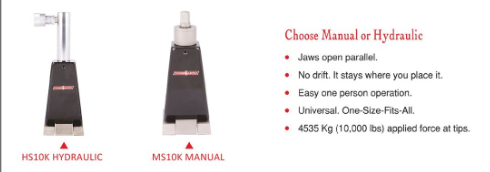
A pipe rack running through a vessel or a pit rarely gives a crew room to swing a hammer. Clearance is tight. Air movement is limited. A worker often ends up bracing against the pipe itself just to get leverage on a stuck joint. Flange separator tools exist for this exact situation, letting a technician open a joint without the impact force or awkward body position manual separation usually requires.
Why the Space Itself Adds Risk
OSHA’s confined space standard, 29 CFR 1910.146, requires isolating many piping systems before entry, typically through blanking, blinding, or physically breaking the line. There is a reason for this. A flange still holding pressure or residual product can fail suddenly if forced open incorrectly, and a vessel or trench leaves little room to react. Bracing space runs short too, so a worker striking a chisel or pry bar has less say over where that force actually lands.
Where Manual Methods Fall Short
Hammers, chisels, pry bars, and wedges have long been used to break stuck flange joints. In a confined space, these methods carry particular downsides:
- Striking tools require swing room that tight piping runs rarely allow
- Uneven force can gouge flange faces or distort bolt holes
- Sudden separation under manual force can cause pinch injuries or dropped tooling
- Repeated impact fatigues workers faster in low-oxygen or poorly ventilated areas
Flange separator tools solve this problem by applying mechanical or hydraulic pressure using wedges on arms inserted between the two flanges. Pressure builds up in a controlled manner, rather than by impact, to maintain the integrity of the seal face. It is customary to leave at least two bolts finger tight when separating to prevent separation, and to use two spreaders spaced about 180 degrees apart to distribute force evenly along the joint line.
Torque Control on Reassembly
Separating the joint safely is only part of the task. Reassembly with the wrong torque creates its own problems, from a leaking gasket at low torque to a cracked flange or stripped thread at high torque, and correcting either after the crew has left the space is rarely simple.
An electric torque wrench applies force through a motor-driven gearbox with a digital readout, generally holding within a few percentage points of the target value. It skips the compressed air line a pneumatic tool needs and the hose and external pump a hydraulic wrench carries. In a space where there is barely room for the tool itself, that difference counts. A preset torque value also means the fortieth bolt on a flange gets the same load as the first one, regardless of who is holding the wrench at that point in the shift.
Conclusion
Hydraulic spreaders for separation and digitally controlled wrenches for reassembly, used together, reduce the hoses, cords, and hand tools competing for space in a confined pipe run. They also reduce the physical strain a crew absorbs over a long shift. Bolting Systems builds electric torque wrenches and flange spreading equipment for this kind of work, where a joint that opens or closes the wrong way leaves little margin for error.