When you begin your running journey, it is natural to feel excited and motivated to improve quickly, which often leads many beginners to focus on speed right from the start instead of building a strong and comfortable foundation. However, running is not just about how fast you move but about how well your body adapts to a completely new form of physical stress over time.
In the early stages, your muscles, joints, and feet are still adjusting to the repetitive impact of each stride, and pushing too hard too soon can create unnecessary strain that leads to discomfort rather than progress. Choosing comfort over speed allows your body to gradually adapt to movement in a safe and sustainable way so that running becomes a habit you can maintain instead of a challenge you struggle to recover from.
Your Body Needs Support Before It Needs Speed
Running places repeated impact forces on your feet, ankles, knees, and hips, and when your body is not yet conditioned to handle this load, even small discomforts can quickly grow into larger problems. Many beginners underestimate how important it is to let the body build strength and resilience gradually rather than forcing performance goals too early in the journey.
When you prioritise comfort, your stride stays more natural and your movement remains efficient, which reduces the risk of fatigue and unnecessary stress on joints. Instead of fighting discomfort or adjusting your posture to compensate for pain, you are able to focus on developing rhythm and balance, which are far more valuable in the long term than achieving a faster pace in the beginning.
Natural Movement Should Always Come First
Every runner moves differently, and factors such as foot shape, landing pattern, and pressure distribution play an important role in how comfortable a run feels. Some runners naturally land with even pressure while others tend to place more weight on the outer edge of their feet, and when footwear does not support these natural tendencies, running becomes inefficient and tiring.
Running shoes that work with your body’s movement pattern helps you conserve energy and maintain a smoother stride, which directly contributes to how enjoyable and sustainable your runs feel. Comfort is not just about softness but about how well the shoe aligns with your natural biomechanics so that movement feels effortless instead of forced.
Pushing Too Hard Too Soon Can Slow You Down
Many new runners believe that running faster or longer distances immediately is a sign of progress, but this approach often leads to tight muscles, joint discomfort, or persistent soreness that interrupts consistency.
When early runs feel exhausting or painful, motivation begins to drop and the likelihood of sticking with the routine becomes lower. Comfort, on the other hand, supports sustainability because it allows you to return for your next run without hesitation.
Running should feel manageable and rewarding rather than overwhelming, especially in the beginning, and focusing on ease of movement instead of performance will help you build confidence with each session instead of risking burnout.
The Importance of Comfortable Running Shoes
Footwear plays an important role in shaping how your running experience feels, especially when you are still building familiarity with the activity. Research has shown that comfortable shoes can help reduce energy use and lower the likelihood of injury because they support natural movement rather than restricting it.
Comfort in running shoes depends on a combination of proper fit, balanced cushioning, gentle support, and breathability, all of which work together to create a smooth and stable running experience.
Instead of focusing on the size, price tag or appearance, beginners should pay attention to how the shoe feels during movement, since comfort often changes when transitioning from standing to walking and finally to running.
A Supportive Choice for Beginners
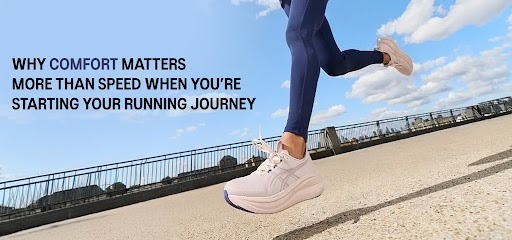
ASICS running shoes prioritise comfort and confidence over aggressive performance features, which is reflected in designs like the GEL-NIMBUS™ 28.
These running shoes for women are lighter than its previous version and combine FF BLAST™ PLUS cushioning with PureGEL™ technology to create a soft landing experience that helps reduce impact stress.
The engineered knit upper wraps the foot gently, allowing for a snug yet breathable fit that enhances overall ease during movement. By focusing on cushioning and natural support, ASICS running shoes can help beginners build a consistent routine without feeling overwhelmed by discomfort.
Comfort Builds Consistency and Confidence
When running feels smooth and supported, it becomes easier to maintain consistency, which is the true driver of progress in the early stages of your journey. Comfortable runs encourage you to show up regularly because the experience feels manageable rather than physically demanding in a negative way.
Over time, consistency improves endurance, endurance strengthens the body, and strength naturally leads to improved pace without forcing it. By allowing comfort to guide your early runs, you create a foundation that supports long term growth instead of chasing short term performance gains.
Final Thoughts
Choosing comfort over speed at the beginning of your running journey is not a compromise but a smart strategy that sets you up for long term success. The right running shoes for women that have supportive cushioning, and focus on natural movement can make your runs feel smoother and more enjoyable, which increases the likelihood of staying consistent.
ASICS design their running shoes to support this phase where sustainability matters more than performance, helping beginners build confidence step by step. Instead of worrying about how fast you are going, focusing on how comfortable your run feels will ensure that you keep moving forward in a way that is both safe and rewarding.