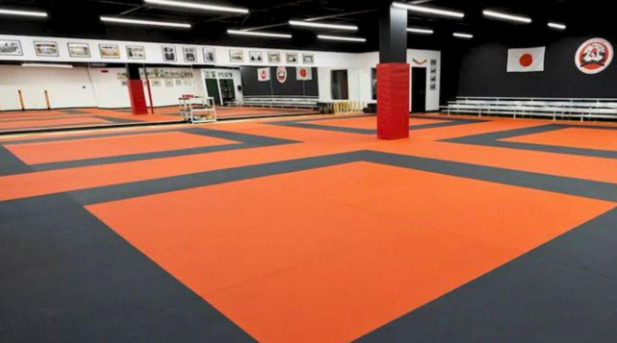
Not all martial arts ask the floor to do the same job. A boxing class needs quick footwork and stable movement. A grappling class may spend much of its time close to the ground. A judo or aikido session may involve repeated throws and landings. From the door, the space may look the same. Under the feet, it has to do different work.
This is why choosing martial art mats should start with the training style, not just the room size. A mat that works well for one activity may feel wrong for another. The wrong surface can affect movement, comfort, confidence, and safety. In shared gyms, this becomes tricky because one area may need to support several types of training.
Striking places a lot of demand on the feet. People step, pivot, bounce, and change angles. The mat needs enough grip to stop slipping, but not so much that the foot sticks during a turn. If the surface is too soft, balance may feel unstable. If it is too rough, it may become uncomfortable. For boxing, kickboxing, karate, and taekwondo, smooth movement matters as much as cushioning.
Grappling has a different rhythm. Training may include kneeling, rolling, pinning, scrambling, and pressure on the floor. Comfort becomes more important because the body spends more time in contact with the surface. The mat should help reduce pressure on knees, elbows, shoulders, and hips. It should also allow bodies to move without painful friction. Too much drag can make drills uncomfortable, while too little grip can make control harder.
Throwing arts bring another layer of need. When people are lifted, swept, or taken to the ground, impact protection becomes more important. The mat must help absorb landings while still allowing stable footwork before the throw. A very soft surface may feel safer for landing but poor for standing movement. A firm surface may help footwork but feel harsh when falls are repeated.
Thickness is often the first feature buyers notice, but it should not be the only one. Density, surface texture, underside grip, joining system, and installation all affect performance. A thick mat with poor density may bottom out under force. A thinner mat with stronger materials may perform better than expected. Looking only at measurements can lead to a poor choice.
Shared training spaces need extra care. A small gym might run striking classes on Monday, grappling on Wednesday, and mixed training on Friday. In that case, the owner may need a compromise surface. It may not be perfect for every style, but it should be safe and practical for the main activities. If throws are common, impact support should take priority. If the space is mostly for footwork and fitness, grip and stability may matter more.
Cleaning also changes by activity. Grappling and floor-based training create more body contact with the surface. Sweat, skin contact, and regular movement make hygiene important. The top layer should be easy to wipe down and suitable for frequent cleaning. Gaps between mats should be controlled because dirt can collect there. Clean martial art mats protect users and help the training area look professional.
Durability should match the training load. A home practice space may not need the same strength as a busy club. A commercial gym, however, may run classes every day. Repeated footwork, dragging, impact, and cleaning can wear weak mats quickly. Strong edges and secure joins matter because loose sections can shift during training.
Martial art mats are not just flooring. They shape how movement feels and how safely people can practise. Striking, grappling, and throwing each place different demands on the surface, so the right choice should follow the activity.