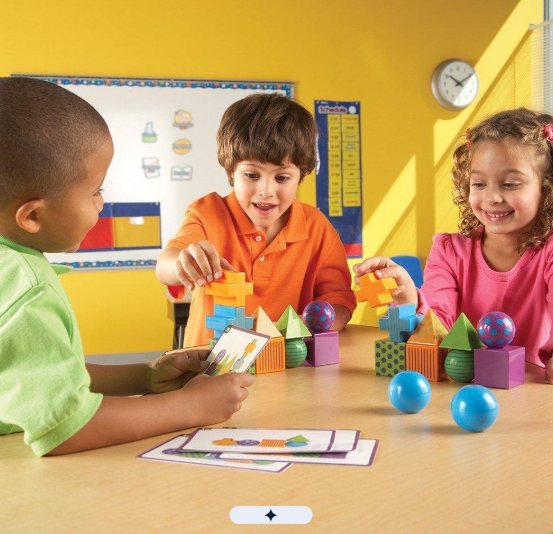
Children often respond differently when lessons allow them to participate, experiment, answer questions, and see immediate results. A well-designed digital lesson can turn a routine study session into an experience that encourages curiosity. For families exploring online fun courses, the focus is not simply on keeping children entertained. It is about creating meaningful opportunities to understand concepts while remaining actively involved.
A strong virtual learning format can also adapt to different ages, academic levels, interests, and learning gaps. Live interaction, personalized instruction, visual resources, quizzes, and practical activities can give students several ways to approach the same concept. When learning feels approachable, children may become more willing to ask questions, attempt difficult problems, and communicate what they understand.
Why Enjoyment Matters in a Child’s Learning Process
Enjoyment can influence how willingly a child participates in an academic activity. When a lesson includes questions, challenges, examples, or interactive tasks, students have more reasons to stay involved instead of simply listening. This active participation can help turn abstract information into something easier to discuss and remember.
A positive learning experience does not mean academic expectations become less important. Instead, enjoyable instruction can provide a more approachable route toward those expectations. A child working through a puzzle, explaining an answer, or responding to a quick quiz is still practicing valuable academic skills while experiencing a more varied lesson format.
Interactive Activities Can Change the Pace of a Lesson
A lengthy explanation can become difficult for younger learners to follow, particularly when the subject involves unfamiliar terminology or complicated processes. Interactive activities introduce changes in pace. A tutor might explain an idea, ask a question, present a visual example, and then invite the student to solve a related problem.
Digital instruction can support this approach through quizzes, videos, animations, and other visually rich learning materials. Such resources can provide additional ways to present information rather than relying entirely on verbal explanation.
Questions Encourage Active Thinking
Questions can make children participants rather than passive listeners. Instead of receiving an answer immediately, a student can be encouraged to explain a thought, identify a pattern, or predict what happens next. This approach gives the tutor useful insight into the child’s reasoning.
Games Can Introduce Healthy Challenges
Game-inspired activities can give ordinary practice a clear objective. A timed calculation, logic puzzle, or problem-solving challenge may encourage concentration without making the activity feel like another worksheet. The level of difficulty can also be adjusted according to the learner’s ability.
Visuals Can Clarify Abstract Ideas
Visual material can help children connect unfamiliar information with something recognizable. Diagrams, animations, demonstrations, and examples can make complex concepts easier to examine. For younger students especially, seeing how an idea works can provide useful context before formal terminology is introduced.
Quizzes Can Reinforce Understanding
Short quizzes can provide an immediate opportunity to revisit material. They can reveal whether a student understood a lesson or needs another explanation. Educational quizzes are specifically highlighted as part of the learning experience offered through the platform.
Personalization Makes Participation More Meaningful
Children do not always struggle with an entire subject. A student may understand multiplication but have difficulty with word problems, or know vocabulary but hesitate when speaking. Personalized instruction allows lessons to focus on specific gaps rather than spending equal time on every topic.
One-to-one tutoring can also give students room to communicate without competing with classmates for attention. The tutor can adjust explanations, provide additional practice, or change the pace when a concept needs more time. Personalized assessments and progress reports can further help identify areas requiring attention.
Making Mathematics More Engaging
Mathematics becomes more approachable when students can connect numbers with reasoning, patterns, practical situations, and challenges. Rather than treating every exercise as a calculation, instruction can encourage children to explain why an answer works. That shift can help develop reasoning alongside accuracy.
Different mathematical approaches can also serve different learning needs. Programs may include school mathematics, Abacus, Singapore Maths, and logical reasoning, giving students opportunities to strengthen calculation, conceptual understanding, concentration, and problem-solving abilities.
Real-World Examples
A mathematical idea can become easier to understand when connected to familiar situations. Shopping totals, measurements, schedules, distances, shapes, or comparisons can provide context for numerical concepts. Practical examples help students see why a particular method matters outside a workbook.
Logical Challenges
Reasoning activities can encourage students to search for patterns instead of applying a memorized formula automatically. Puzzles and structured problems can require learners to compare possibilities, identify relationships, and justify their choices. These habits can support broader problem-solving development.
Flexibility Helps Families Build Consistent Routines
A useful learning schedule has to work within a family’s existing commitments. School hours, extracurricular activities, travel, homework, and household routines can make fixed schedules difficult to maintain. Flexible scheduling can make it easier to establish regular academic practice without creating unnecessary disruption.
Live one-to-one instruction can also accommodate learners across different time zones and age groups. The platform states that its programs serve learners from ages 3.5 to 18, with flexible options designed around individual requirements.
Final Thoughts
What if a child’s strongest academic progress begins with a lesson that genuinely holds their attention? That possibility makes the structure of digital education worth examining carefully. Classento brings together live one-to-one tutoring, personalized learning, flexible scheduling, progress reporting, homework support, interactive quizzes, and experienced educators across subjects such as mathematics, English, science, coding, and chess. Its programs are designed for learners across different ages and academic requirements, with a free demo available for families seeking a closer look. For students who need structured support with online math classes, the combination of personalized instruction and interactive learning can provide a practical starting point for building stronger understanding and confidence.