As an investor or financial enthusiast, understanding the concept of earning per share (EPS) is crucial for evaluating a company’s financial performance and making well-informed investment decisions. Earning per share not only acts as one of the most widely used profitability metrics but also serves as a critical factor in determining stock valuation. In this article, we will delve into the meaning of earning per share, explain how it is calculated, and discuss its importance in relation to equity shares. Whether you’re a beginner or an intermediary investor, this easy calculation guide will help you grasp earning per share comprehensively!
What is Earnings Per Share (EPS)?
Earning per share (EPS) is a measure of a company’s profitability that’s calculated by dividing its net profit by the total number of outstanding equity shares. Simply put, earning per share represents the profit a company generates for each equity share held by shareholders. Higher earning per share indicates higher profitability and efficiency in generating returns for investors.
Earning per share is one of the key metrics that financial analysts, investors, and stock market enthusiasts use to gauge a company’s financial health and compare its performance with other companies in similar industries.
Formula for EPS Calculation
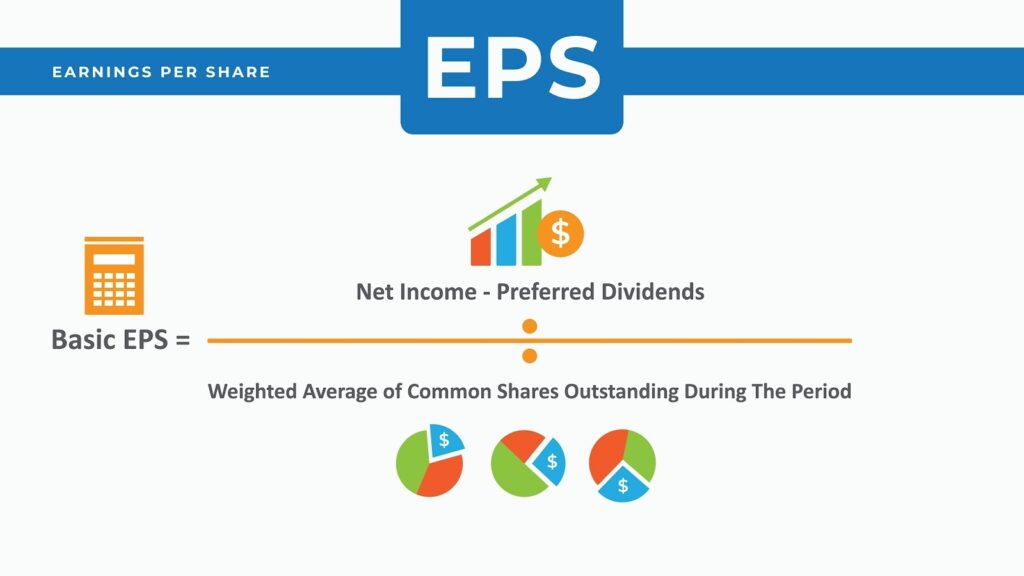
Earning per share can be calculated using a simple formula:
EPS = (Net Profit – Preferred Dividends) / Weighted Average of Outstanding Equity Shares
Here’s a breakdown of the elements in the formula:
- Net Profit: This is the company’s total profit after deducting all expenses such as operating costs, taxes, and interest. It’s often referred to as net income.
- Preferred Dividends: Preferred dividends pertain to the fixed payments made to holders of preferred shares. Preferred shareholders are given priority over equity shares holders in receiving dividends. If a company has issued preferred shares, the earnings available to equity shares holders will exclude these dividends.
- Weighted Average of Outstanding Equity Shares: This accounts for any fluctuations in the total number of shares during the financial year. For instance, if the company issues additional equity shares or conducts a stock split during the year, these changes should be reflected in the weighted average calculation.
Steps to Calculate EPS (With Example)
Now that you know the formula, let’s dive into how earning per share is calculated with a simple, step-by-step example:
Example:
Imagine “XYZ Ltd.” has the following financial details for the financial year:
- Net Profit: $500,000
- Preferred Dividends: $50,000
- Total Outstanding Equity Shares: 100,000
Step 1: Subtract Preferred Dividends from Net Profit
The first step is to determine the earnings available to shareholders of equity shares:
$$Net Profit – Preferred Dividends = \$500,000 – \$50,000 = \$450,000$$
This means $450,000 will be available to equity shares holders.
Step 2: Divide This Value by Number of Outstanding Equity Shares
Now, divide the earnings available for equity shares holders by the total number of equity shares:
$$EPS = \frac{Earnings Available to Shareholders}{Outstanding Equity Shares}$$
$$EPS = \frac{\$450,000}{100,000} = \$4.50$$
Final EPS = $4.50
This means XYZ Ltd. generates $4.50 in earnings for every equity share held by its shareholders.
Types of EPS
Earning per share isn’t just calculated as a single static figure. It can vary across different scenarios. Here are three common types of earning per share calculations:
1. Basic EPS
Basic EPS is straightforward and is calculated using the formula provided above. It assumes no change in the number of outstanding equity shares or dilution effects from securities like convertible bonds.
2. Diluted EPS
Diluted EPS accounts for potential dilution when additional shares are issued. It represents the lowest possible earning per share that equity shareholders might earn if all potential shares (from stock options, convertible bonds, or warrants) are converted into equity shares.
Formula:
$$Diluted EPS = \frac{Net Income – Preferred Dividends}{Weighted Average Shares Outstanding + Convertible Shares}$$
3. Trailing EPS vs. Forward EPS
- Trailing EPS is calculated using the company’s earnings from the last completed financial year.
- Forward EPS estimates earnings based on future projections or guidance, which can be useful for analyzing a company’s growth prospects.
Why is EPS Important?
Earning per share serves several important functions in investment analysis and is critical in stock and financial market evaluations. Here’s why:
1. Indicator of Profitability
Earning per share reflects how well the company is generating profits for its shareholders. A higher earning per share generally represents stronger profitability and efficient business operations.
2. Stock Valuation
Earning per share plays a vital role in determining the valuation of a company’s stock. Investors use earnings per share to calculate stock valuation ratios like the Price-to-Earnings (P/E) ratio, which shows how much investors are willing to pay for $1 of earnings. The formula for P/E ratio is:
$$P/E Ratio = \frac{Market Price Per Share}{Earnings Per Share}$$
3. Comparative Analysis
Earning per share allows investors to compare financial performance across companies within the same industry. By analyzing earning per share figures, investors can determine which company is generating better returns on equity shares.
Factors That Impact EPS
Several factors can influence a company’s earning per share calculation, such as:
- Changes in Net Profit or Loss
A rise or fall in profits directly affects earning per share calculations. - Stock Issuances or Buybacks
When a company issues new equity shares or conducts buybacks to reduce the total number of shares, it alters the weighted average calculation and impacts earning per share. - Accounting Adjustments
Accounting decisions impacting net income (e.g., provisions, depreciation policies) can change the earning per share reported. - External Economic and Market Conditions
Broader economic factors, such as rising operating costs or changing interest rates, may impact a company’s profitability and earning per share.
What is a Good EPS?
There’s no one-size-fits-all answer to what constitutes a good earning per share since it depends on factors such as the industry, company size, and market conditions. For example, tech companies and high-growth firms often have lower earnings per share in their early stages as they invest heavily in expansion. On the other hand, utility companies or traditional businesses may exhibit stable and higher earnings per share due to their steady business models.
Tip: Don’t rely solely on earning per share when assessing a company’s potential. Instead, pair earning per share analysis with other financial metrics such as the P/E ratio, dividend yield, return on equity (ROE), and debt-to-equity ratio.
Pitfalls to Watch For
While earning per share is a powerful metric, it isn’t perfect. Investors must be aware of its limitations:
- Accounting Manipulations: Companies can manipulate net income figures through accounting loopholes, affecting earning per share and misleading investors. For example, one-time gains from asset sales can inflate earning per share figures.
- Impact of Diluted EPS: Dilution from convertible securities or additional stock issuance can significantly reduce per-share earnings, eroding shareholder value of equity shares.
- Unrealistic Comparisons: Comparing earnings per share across industries or companies with vastly different business models can lead to inaccurate conclusions. Always use normalized earning per share comparisons within specific industry sectors.
Final Thoughts
Earning per share (EPS) is undoubtedly one of the most important metrics for financial analysis and investment decision-making. It helps investors understand a company’s profitability, stock valuation, and long-term growth potential. By using our easy calculation guide, you can confidently calculate and interpret earning per share figures to measure how well a company is utilizing equity shares to drive profitability.
However, earning per share should never be used in isolation. Pair it with other financial ratios and metrics to build a comprehensive picture of a company’s financial health. Whether you’re a beginner or seasoned investor, mastering earning per share will elevate your ability to identify quality investments and maximize returns in the stock market.
Start analyzing stocks with earning per share today, and enhance your financial literacy — because knowledge is the key to successful investing!