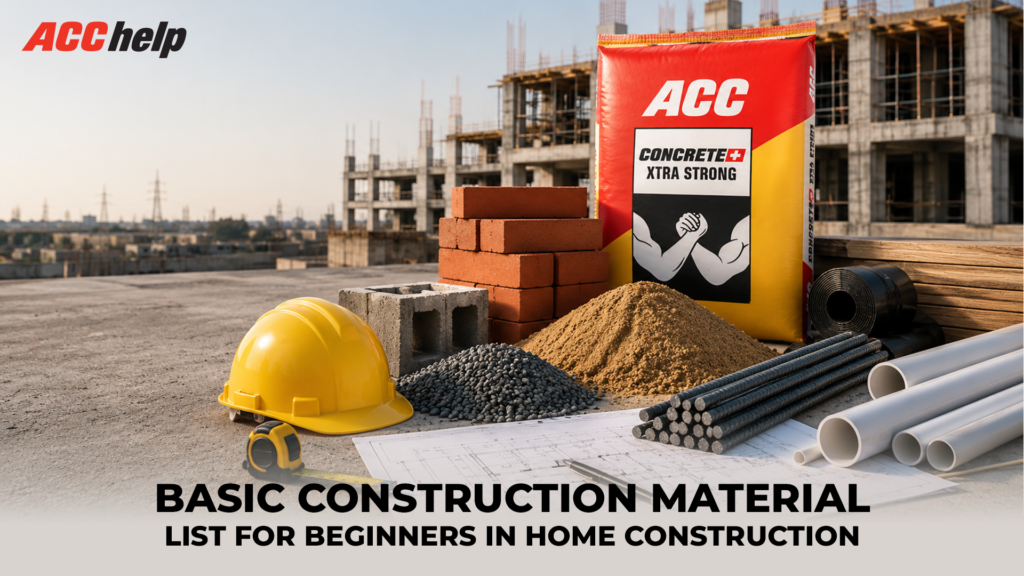
Starting your first home construction project is an exhilarating milestone, but it often feels like walking into a storm of technical jargon and endless receipts. For a beginner, the sheer volume of supplies required can be overwhelming.
One day you’re looking at floor plans, and the next, you are staring at a massive construction materials list wondering if you really need three different types of sand.
Success in home building doesn’t just come from a good architect, it comes from meticulous planning and an understanding of the materials that go into your home.
The Core Essentials: Your Primary Construction Materials List
Before you even think about the colour of your kitchen cabinets, you must focus on the grey structure. This is the skeletal system of your house. If this part isn’t perfect, no amount of expensive marble will save the building later.
A. Cement
Cement is the most critical item on your construction materials list. It acts as the glue that holds everything together. In India, you typically choose between OPC for high strength structural work and PPC for brickwork and plastering. Premium brands, like ACC, offer specialised variants such as water shielding cement to protect your roof from monsoons.
B. Steel Reinforcement
If cement is the flesh, steel is the bone. TMT bars are used to provide tensile strength to concrete. Without steel, your concrete would be brittle and prone to cracking under its own weight.
C. Aggregates
- Fine Aggregate (Sand): Used in mortar and concrete mixes. Make sure the sand is free from silt and clay.
- Coarse Aggregate (Stone Chips): These provide bulk and strength to the concrete mix. Usually, a mix of 10mm and 20mm stones is used for residential slabs.
D. Bricks or AAC Blocks
Traditional red bricks are still popular, but many modern builders are switching to AAC blocks. These are lighter, provide better thermal insulation and can actually reduce the load on your foundation.
The Role of a Construction Cost Calculator
One of the biggest mistakes beginners make is guessing the estimated cost. You might think you know how much a bag of cement costs, but do you know how many bags you need for a 1200 sq. ft. slab?
This is where digital intervention becomes a lifesaver. Utilising online construction cost calculators, like ACC Help Home construction cost calculator, allows you to input your plot area and local city data to get a realistic estimate.
These tools don’t just give you a total number, they break down your budget into cement, steel, labor, and finishing costs. By using these early in the planning stage, you can identify if your dream design exceeds your budget. It allows you to make value engineering decisions, perhaps choosing a slightly more affordable flooring to ensure you can afford the highest quality waterproof cement for the terrace.
The Secondary Material Layer: Finishing and Protection
Once the grey structure is standing, your construction materials list shifts toward making the house livable and beautiful.
A. Waterproofing Chemicals
Do not wait for the first rain to realise you have a leak. Modern construction involves adding waterproofing compounds directly into the concrete mix or applying them as membranes. Products such as those found in the ACC portfolio are specifically designed to create a hydrophobic barrier that keeps your interiors bone dry.
B. Plumbing and Electrical Conduits
PVC pipes for drainage and CPVC for hot/cold water are standard. For electricity, make sure you use fire retardant wires and high quality PVC conduits that are buried deep within the walls before plastering begins.
C. Flooring and Wall Finishes
This includes everything from vitrified tiles and granite to wall putty and primer. While these are aesthetic choices they represent a significant portion of your budget. Always cross reference these quantities with an ACC Help home construction cost calculator to make sure you aren’t over ordering expensive Italian marble or high end tiles.
How to Stay Organised During the Build
Organisation is the difference between a successful build and a nervous breakdown.
- Phase-wise Procurement: Don’t order all of your material at once. Cement, for example, has a shelf life. It absorbs moisture from the air and can set inside the bag if left for months. Order only what you need for the next 30 days.
- Verify Deliveries: Always count the bags and check the weight of the steel arriving at your site. Discrepancies in delivery are a common way for budgets to leak.
- Continuous Estimation: Every time the price of steel or cement fluctuates in the market, re-run your numbers through a construction cost calculator. This keeps your financial roadmap updated in real time.
Why Quality Sourcing Matters
In a market as vast as India, it is tempting to go for the unbranded or local versions of the items on your construction material list to save a few thousand rupees. However, construction is a 50 year investment.
Buying from established names, like ACC, gives you a guarantee of chemical consistency. If one batch of cement sets differently than the next, your walls will develop shrinkage cracks. When you buy quality, you are buying the research and development that goes into making sure every bag performs exactly like the last one.
Building with Confidence
Construction doesn’t have to be a mystery. By breaking down your project into a manageable construction materials list, you take the first step toward becoming a savvy home builder. You move from being a passive bystander to an active manager of your project.
Remember, the tools are there to help you. Whether it is seeking technical assistance from experts at brands like ACC or using ACC Help home construction cost calculator to stay on budget, you don’t have to do this alone.
Take your time with the planning, prioritize the quality of your base materials, and keep your calculator handy. Your dream home is a marathon, not a sprint. With the right materials and a solid financial plan, you are well on your way to building a sanctuary that will stand strong for generations.