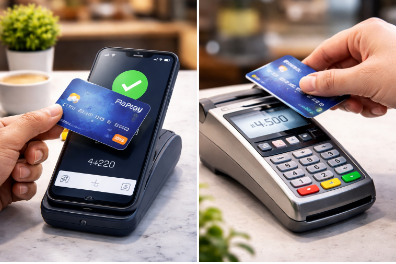
Digital payments in India continue to evolve in 2026, giving users multiple ways to complete everyday transactions. Eligible Credit Cards can now be linked to supported UPI apps for QR-based merchant payments, while traditional swipe, chip, and tap payments remain widely used across retail and travel sectors. Both methods offer different advantages depending on merchant acceptance, convenience, and payment habits. Understanding how these payment options work can help users choose the method that best suits their spending situation.
What UPI Card Payments Mean
UPI card payments allow eligible RuPay cards to be linked with supported UPI applications. Once linked, users can scan a merchant’s QR code and complete the transaction using their available card limit instead of directly using funds from a bank account.
This payment method mainly works for merchant transactions supported under the RuPay credit-on-UPI framework introduced by NPCI. The process combines QR-based payment convenience with the billing-cycle benefits of Credit Card usage.
For many users, this creates a familiar payment experience because QR payments are already widely used across grocery shops, pharmacies, restaurants, and local stores. However, the transaction amount still appears on the card statement and must be repaid within the billing cycle.
What Traditional Swipe Payments Mean
Traditional swipe payments happen through point-of-sale machines installed at merchant outlets. Users complete the transaction by swiping, inserting, or tapping the physical card on the machine, then authenticating the payment with a PIN or via a contactless approval process.
This method continues to remain common across organised retail stores, hotels, airports, hospitals, fuel stations, and shopping centres. It is also widely used in situations where merchants rely on POS terminals rather than QR-based systems.
Many users still prefer traditional card payments because the process is familiar and accepted across a broad range of businesses.
UPI Card Payments vs Traditional Swipe: Key Differences
Although both methods allow users to make purchases using a card account, the payment experience differs in several ways. Some of the main differences include:
● Payment Method: UPI card payments use QR codes via a mobile application, while traditional payments rely on physical card readers.
● Device Requirement: UPI payments require a smartphone with a supported app. Traditional swipe payments mainly require access to the physical card.
● Merchant Acceptance: QR-based payments are common among small and medium businesses, while POS machines are more common in organised retail environments.
● Authentication Process: UPI transactions typically require a UPI PIN, whereas traditional payments may require a card PIN or tap-based approval.
● Transaction Environment: UPI works well for phone-led transactions, whereas traditional swipe payments remain useful in stores with dedicated billing systems.
Both payment methods continue to serve different transaction environments in 2026.
When UPI Card Payments May Be Useful
UPI-linked card payments may be suitable when QR payments are already part of daily spending habits. They are commonly used for local shopping, food outlets, and small-value merchant transactions.
Some practical situations where this method may help include:
● Small Merchant Payments: Many neighbourhood stores now depend heavily on QR-based transactions.
● Phone-Led Convenience: Users can complete payments without carrying the physical card.
● Faster Checkout Experience: Scanning a QR code can help speed up routine purchases.
● Expense Tracking Through Apps: Payment history remains visible within the UPI application for easier review.
These benefits may support convenience, especially for users who already prefer digital payment applications for daily spending.
When Traditional Swipe Payments May Be Useful
Traditional card payments remain important across several sectors where POS terminals are standard.
Some common situations include:
● Hotels and Travel Bookings: Many hospitality businesses continue to depend on card terminals for transaction processing.
● Large Retail Stores: Organised retailers often integrate billing systems directly with POS machines.
● Fuel Stations: Card machines remain widely available at fuel outlets across India.
● Low-Network Situations: Physical card payments may work more reliably in areas with unstable mobile internet access.
Traditional swipe or tap payments also support transactions where printed receipts or machine-based verification is preferred.
What Users Should Check Before Choosing
Before selecting a payment method, users should review a few practical factors that may affect convenience and repayment management. Some important areas to consider include:
● Card Eligibility: Not all Credit Cards currently support UPI linking.
● Merchant Support: Some businesses accept QR payments, while others depend mainly on POS terminals.
● Billing Cycle: Users should understand repayment timelines before frequently using card-based transactions.
● Security Settings: Transaction alerts and PIN protection remain important for safe usage.
● Usage Habits: Spending patterns may influence which payment method feels more practical for daily use.
Anyone exploring how to get a Credit Card should compare features, repayment terms, charges, and digital payment support before applying, as these factors can influence overall payment convenience and repayment management.
Conclusion
UPI-linked card payments and traditional swipe payments both remain relevant in 2026. QR-based payments offer convenience for everyday merchant transactions, while swipe or tap payments still support a wide range of retail and travel-related purchases. The better option depends on merchant acceptance, payment habits, and user preference. Using either method responsibly can help users manage transactions more efficiently across different payment situations.