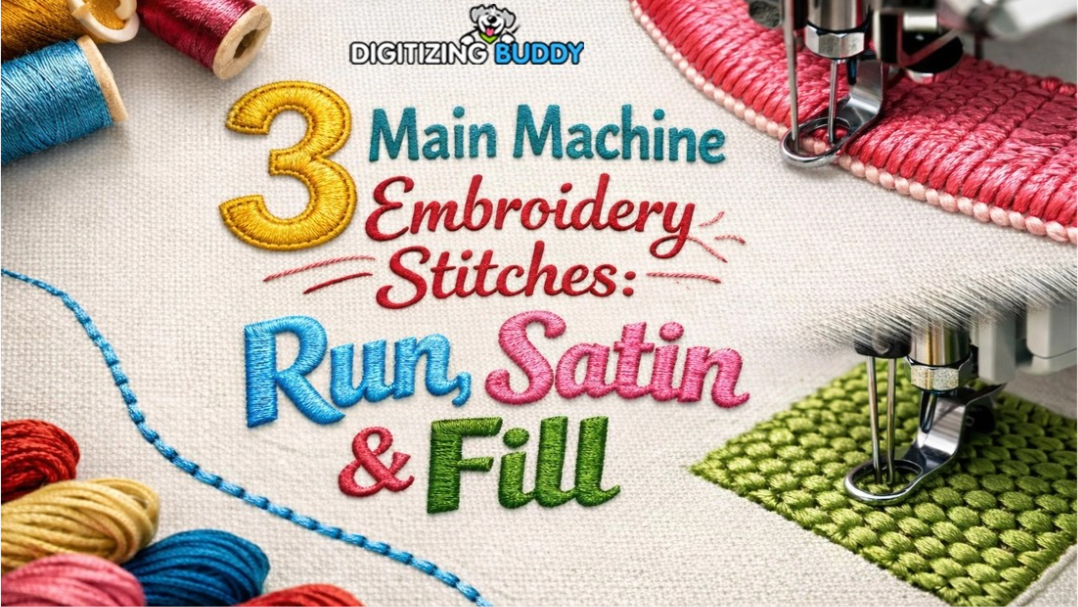
Learn the complete Guide to Machine Embroidery Stitches, including stitch types, uses, tips, and techniques for clean, professional embroidery results.
Guide to Machine Embroidery Stitches
Machine embroidery looks simple when you watch a design stitch out perfectly on fabric. But behind every clean logo, floral pattern, or decorative design is one important detail — the right embroidery stitch.
If you’ve ever wondered why some embroidery designs look smooth and professional while others appear bulky, uneven, or messy, stitches are usually the reason.
This guide to machine embroidery stitches will help you understand the most common stitch types, when to use them, and how to improve your embroidery quality. Whether you’re a beginner or growing your embroidery business with Digitizing Buddy, knowing these basics can save time, thread, and frustration.
What Are Machine Embroidery Stitches?
Machine embroidery stitches are the different stitch patterns used by embroidery machines to create designs on fabric. Each stitch has a specific purpose, texture, and appearance.
Think of embroidery stitches like paintbrushes for an artist. A thin brush creates detail, while a wide brush fills large spaces. In embroidery, different stitches help create outlines, textures, fills, and decorative effects.
Choosing the correct stitch type improves:
- Design quality
- Fabric stability
- Thread efficiency
- Durability
- Overall appearance
Main Types of Machine Embroidery Stitches
Understanding the core stitch types is the first step toward better embroidery results.
1. Satin Stitch
The satin stitch is one of the most popular embroidery stitches. It creates smooth, shiny lines that look clean and elegant.
Best Uses of Satin Stitch
- Lettering
- Borders
- Monograms
- Small details
Why Embroiderers Love It
Satin stitches reflect light beautifully, giving designs a polished finish. They work especially well for logos and text.
Tips for Better Satin Stitches
- Keep stitch width balanced
- Use proper underlay
- Avoid very wide satin areas to prevent snagging
2. Fill Stitch
Fill stitches cover larger areas with textured patterns. They are also called tatami stitches.
Best Uses of Fill Stitch
- Large design sections
- Backgrounds
- Complex patterns
- Bold logos
Benefits
Fill stitches are durable and stable on most fabrics. They also reduce puckering when digitized correctly.
Common Fill Patterns
- Zigzag
- Brick
- Wave
- Diamond
A good fill stitch can make even a simple design look premium.
3. Running Stitch
Running stitches are simple single-line stitches used for outlines and fine details.
Best Uses
- Thin outlines
- Sketch-style embroidery
- Detail work
- Underlay stitching
Why It Matters
Running stitches may look basic, but they are essential in professional digitizing. They help define shapes and improve design accuracy.
4. Bean Stitch
A bean stitch repeats the same line multiple times to create a thicker appearance.
Ideal For
- Decorative outlines
- Bold detailing
- Vintage-style embroidery
Bean stitches add texture without using satin stitching.
5. Motif Stitch
Motif stitches use decorative patterns instead of plain fills.
Popular Motif Styles
- Hearts
- Waves
- Geometric patterns
- Floral textures
These stitches are often used in decorative embroidery and fashion items.
Understanding Stitch Density
Stitch density refers to how close stitches are placed together.
Too much density can:
- Cause thread breaks
- Create stiff embroidery
- Damage fabric
Too little density can:
- Leave gaps
- Make designs look unfinished
Professional digitizing services like Digitizing Buddy carefully adjust stitch density based on fabric type and design complexity.
Choosing the Right Stitch for Different Fabrics
Not every stitch works well on every fabric. Fabric behavior affects embroidery quality more than most beginners realize.
Lightweight Fabrics
Examples:
- Silk
- Cotton shirts
- Linen
Recommended Stitches
- Light satin stitches
- Running stitches
Avoid overly dense fills because they can wrinkle delicate fabric.
Thick Fabrics
Examples:
- Hoodies
- Denim
- Towels
Recommended Stitches
- Fill stitches
- Bold satin stitches
Heavier fabrics support denser embroidery better.
Stretch Fabrics
Examples:
- T-shirts
- Jersey knit
- Sportswear
Best Practice
Use proper stabilizers and lighter stitch density to prevent distortion.
Common Machine Embroidery Problems and Fixes
Even experienced embroiderers face stitching problems sometimes.
Thread Breaks
Causes
- High density
- Poor thread quality
- Needle issues
Fix
- Reduce stitch density
- Replace old needles
- Use quality embroidery thread
Puckering Fabric
Causes
- Wrong stabilizer
- Dense designs
- Improper hooping
Fix
- Choose correct backing
- Hoop fabric tightly
- Adjust stitch settings
Gaps in Embroidery
Causes
- Low density
- Incorrect pull compensation
Fix
- Increase density slightly
- Improve digitizing settings
Why Digitizing Matters in Machine Embroidery
Great embroidery starts long before the machine begins stitching. Proper digitizing determines how stitches behave on fabric.
Professional digitizing helps:
- Reduce production errors
- Improve stitch flow
- Minimize thread trims
- Create cleaner embroidery
At Digitizing Buddy, designs are carefully digitized to match fabric type, stitch direction, and machine performance for better results.
Tips for Cleaner Machine Embroidery
Here are a few practical tips that can instantly improve your embroidery quality:
Use the Right Needle
Different fabrics require different needle types and sizes.
Always Test Stitch
Run a sample before full production. This saves fabric and prevents costly mistakes.
Match Stabilizer to Fabric
A stabilizer acts like the foundation of embroidery. Weak support leads to poor stitching.
Keep Your Machine Clean
Dust and lint affect stitch quality more than many people think.
Choose Quality Digitizing
Even the best embroidery machine cannot fix poor digitizing.
Beginner-Friendly Embroidery Stitch Practice Ideas
If you’re new to embroidery, practice these first:
- Straight running lines
- Small satin lettering
- Simple fill shapes
- Circular stitch patterns
- Border designs
These exercises help improve machine control and stitch understanding.
The Future of Machine Embroidery Stitches
Modern embroidery is becoming more creative and technical. Designers now combine:
- 3D puff embroidery
- Gradient fills
- Textured stitching
- Mixed stitch techniques
As embroidery technology improves, stitch customization will continue to grow.
Learning stitch fundamentals today builds a strong foundation for advanced embroidery later.
Conclusion
Understanding machine embroidery stitches is one of the most important skills in embroidery. The right stitch type can completely change how a design looks, feels, and performs on fabric.
From satin stitches for clean lettering to fill stitches for large designs, each stitch has a specific role. When combined with proper digitizing, stabilizers, and machine settings, embroidery becomes smoother, cleaner, and far more professional.
Whether you’re practicing at home or running an embroidery business, mastering stitch basics will help you create better designs with fewer mistakes.
And if you want professional-quality digitized embroidery files optimized for perfect stitching, Digitizing Buddy can help bring your designs to life.
FAQs
What is the most common machine embroidery stitch?
The satin stitch is one of the most common embroidery stitches because it creates smooth, professional-looking lettering and borders.
Which embroidery stitch is best for large areas?
Fill stitches are best for covering large design areas because they provide durability and even coverage.
Why does my embroidery design pucker?
Puckering usually happens incorrect stabilizers, dense stitching, or poor hooping techniques.
What is stitch density in embroidery?
Stitch density refers to how closely stitches are placed together in a design. Proper density helps create balanced, clean embroidery.
Do I need professional digitizing for machine embroidery?
Yes. Professional digitizing improves stitch quality, reduces errors, and helps embroidery designs run smoothly on machines.